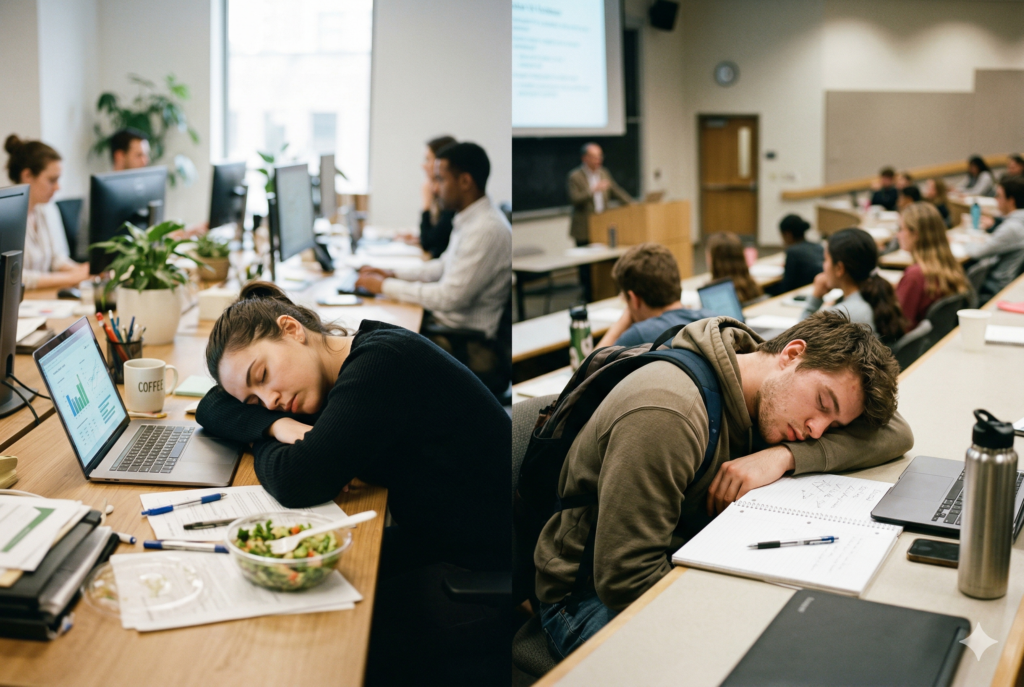
That heavy, sleepy feeling after lunch—when your focus drops and even simple tasks feel hard—is something almost everyone experiences. But this “afternoon slump” isn’t just about eating too much. The real driver? Your blood sugar levels going on a rollercoaster.
After a meal, especially one rich in carbohydrates like rice, bread, or sweets, your blood glucose rises rapidly. In response, your body releases insulin to push this glucose into cells. This creates a post-meal spike in blood sugar. But the story doesn’t end there.As insulin acts, it also alters amino acid balance in the blood, allowing more tryptophan to enter the brain. This is converted into serotonin and then melatonin—the hormone responsible for sleepiness. That’s one reason you start feeling relaxed and drowsy soon after eating (Fernstrom JD, 1994).
At the same time, blood sugar can drop relatively quickly after the spike—a phenomenon often called a “reactive dip.” Even if levels don’t fall dangerously low, this shift can cause fatigue, poor concentration, and brain fog (Cryer PE, 2013). The bigger the spike, the stronger the crash. Studies show that high-carbohydrate meals are more likely to increase post-meal sleepiness compared to balanced meals (Wells AS et al., 1997). This is why heavy lunches often lead to a more pronounced slump.Your body’s natural circadian rhythm also plays a role, as alertness tends to dip in the early afternoon (Monk TH, 2005). But large glucose fluctuations amplify this effect.
✅ How to Prevent the Crash
- Choose balanced meals (add protein and fiber)
- Avoid excessive refined carbohydrates
- Eat moderate portions
- Take a short walk after meals
So next time you feel sleepy after lunch, remember—it’s not a lack of willpower. It’s your blood sugar rising and falling behind the scenes.
📚 References
- Wolever TMS, Jenkins DJA, Jenkins AL, Josse RG. The glycemic index: methodology and clinical implications. Am J Clin Nutr. 1991;54(5):846–854.
- Fernstrom JD. Effects of dietary amino acids on brain function. Am J Clin Nutr. 1994;59(2 Suppl):484S–489S.
- Wells AS, Read NW, Uvnas-Moberg K, Alster P. Influences of fat and carbohydrate on postprandial sleepiness, mood, and hormones. Physiol Behav. 1997;61(4):679–686.
- Cryer PE. Mechanisms of hypoglycemia-associated autonomic failure in diabetes. N Engl J Med. 2013;369(4):362–372.
- Monk TH. The post-lunch dip in performance. Chronobiol Int. 2005;22(3):561–567.
- Benton D, Parker PY. Breakfast, blood glucose, and cognition. Am J Clin Nutr. 1998;67(4):772S–778S.