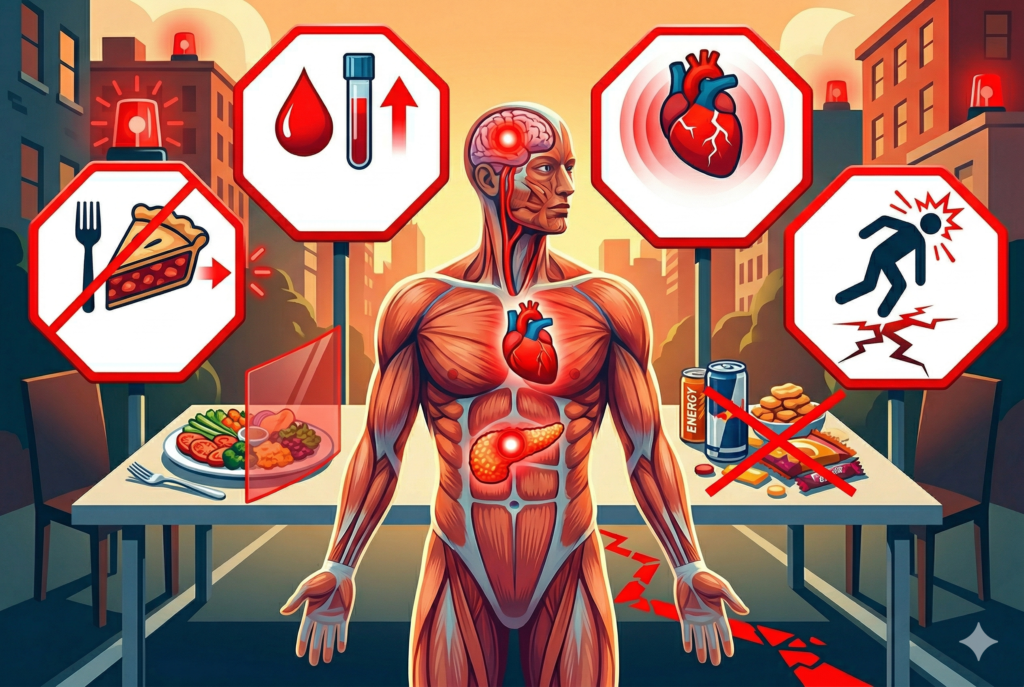
⚠️ Silent Killers: Why Waiting for Symptoms Is a Mistake
You feel completely fine—no pain, no warning signs, nothing unusual. But what if disease is already progressing silently inside your body?
Non-communicable diseases (NCDs) like Hypertension, Type 2 Diabetes, and Coronary Artery Disease are responsible for over 70% of global deaths, according to the World Health Organization. What makes them dangerous is not just their prevalence—but their ability to remain unnoticed for years. Even when you feel healthy:
- Nearly 1 in 3 adults globally has hypertension—many are unaware
- Blood glucose may remain elevated for years before diagnosis
- Fatty plaques slowly narrow arteries, reducing blood flow
These processes are gradual, painless, and often detected only during screening.
🚨 When Symptoms Finally Appear
The biggest danger? Late presentation.
- Up to 50% of people with hypertension are undiagnosed
- Many individuals with diabetes are diagnosed only after complications begin
For some, the first symptom is catastrophic:
- Stroke
- Heart attack
- Vision loss
At this stage, damage may already be irreversible.
📊 The Hidden Burden
According to global estimates:
- NCDs cause 41 million deaths annually
- Over 75% of these deaths occur in low- and middle-income countries
- The number of adults with diabetes has risen to over 500 million worldwide
This highlights a critical truth: feeling normal does not mean being healthy.
✅ What You Can Do
Early detection is your strongest defense:
- Check blood pressure at least once every 1–2 years
- Screen blood sugar regularly, especially if at risk
- Maintain a balanced diet and stay physically active
- Avoid tobacco and limit alcohol
- Don’t skip routine health check-ups
💡 The Takeaway
Waiting for symptoms is a mistake. Silent diseases don’t warn you—they progress quietly until complications appear. But with early screening, many of these conditions can be detected and controlled.
Your body may be silent today—but prevention starts before symptoms begin.
📚 References
- World Health Organization. Noncommunicable diseases. Geneva: WHO; 2023.
- GBD 2019 Risk Factors Collaborators. Global burden of 87 risk factors in 204 countries and territories, 1990–2019. Lancet. 2020;396(10258):1223–1249.
- World Health Organization. Package of essential noncommunicable disease interventions (PEN) for primary health care. Geneva: WHO; 2020.